
The Unforgiving Logic of "The Cold Equations"
Tom Godwin’s 1954 short story, "The Cold Equations," remains one of science fiction’s most potent and contentious works, an elegant and brutal demonstration of hard science principles. Its unflinching premise about a stowaway in space still sparks fierce debate about the intersection of logic, empathy, and the unforgiving cosmos.
The emergency was absolute, the solution horrifyingly simple, and the protagonist, pilot Barton, faced a choice that wasn't really a choice at all. In July 1954, Astounding Science Fiction presented Tom Godwin's short story, "The Cold Equations," and immediately set the stage for one of science fiction’s most enduring and divisive debates. It’s a tale that distills the brutal realities of space travel down to its most agonizing moral calculus, stripping away sentimentality to reveal the universe as a place utterly indifferent to human feeling.
Published during the burgeoning optimism of the 1950s, when humanity’s gaze was fixed on the stars, "The Cold Equations" offered a stark counterpoint to the more adventurous, less realistic space opera that often graced the pulp pages. Editor John W. Campbell Jr. had cultivated a particular brand of hard science fiction at Astounding, prioritizing logical problem-solving and scientific accuracy over narrative convenience. Godwin’s story was a perfect, if chilling, exemplar of this ethos, a literary thought experiment designed to demonstrate the unbending laws of physics against the fragile desires of the human heart.
The Golden Age of Uncompromising Physics
Before Godwin, science fiction had already explored tough choices and the perils of the unknown, but often with a narrative safety net. While writers like Robert Heinlein pushed boundaries with stories of self-reliance and the harshness of the frontier, "The Cold Equations" presented a scenario where no heroic ingenuity, no last-minute reprieve, could alter the outcome. It posited that in the vacuum of space, beyond Earth's comfortable atmosphere and its social conventions, there are no miracles, only equations.
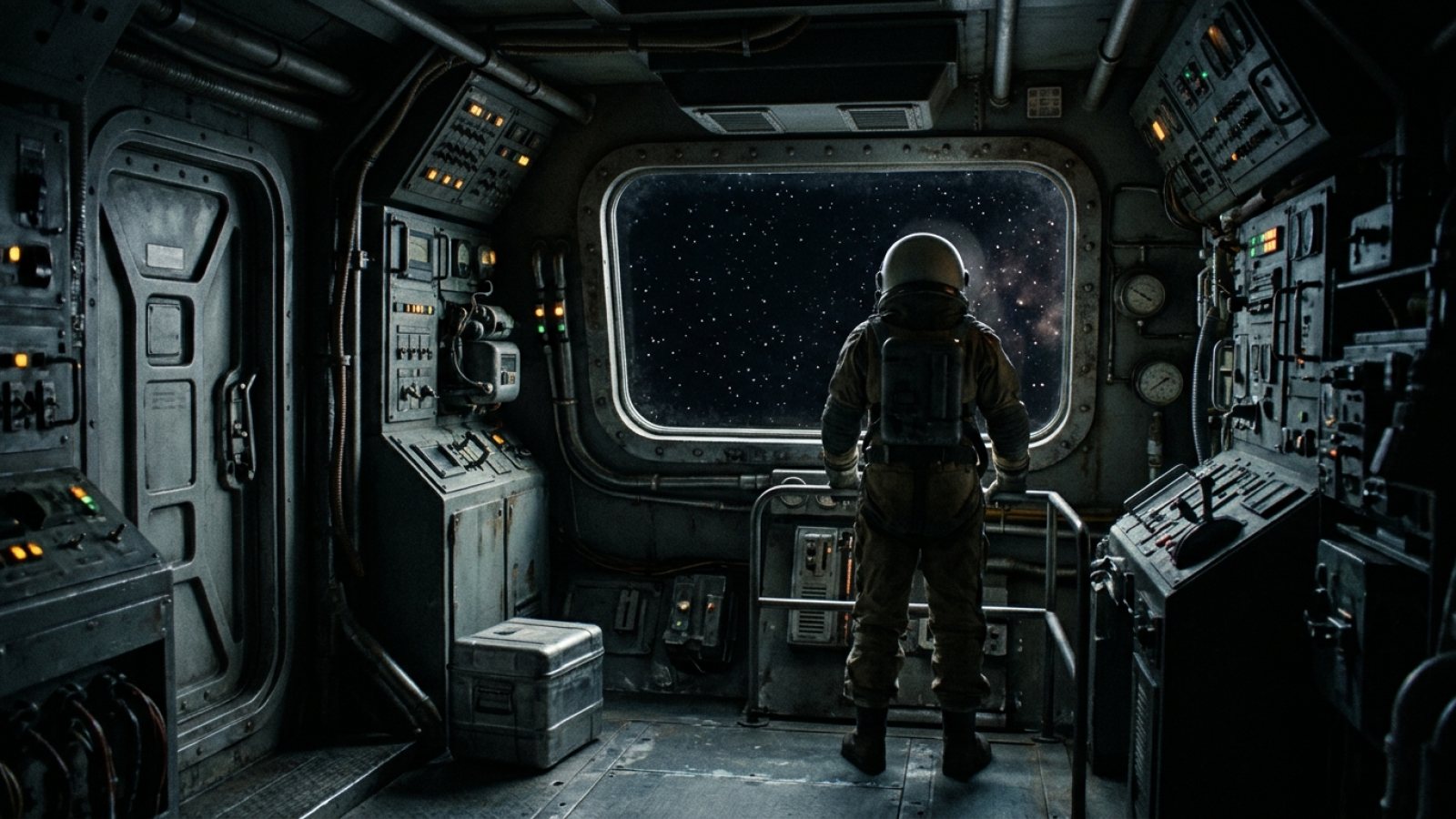
The premise is disarmingly direct: a small Emergency Dispatch Ship (EDS) is en route to a distant planet with critical medical supplies. Every ounce of fuel, every kilogram of mass, has been calculated to the decimal. When pilot Barton discovers a stowaway, a young woman named Marilyn who simply wanted to see her brother, he knows, with crushing certainty, that her extra mass means the EDS will fall short of its destination, dooming not only the mission but everyone on board the receiving planet. There is no other outcome; physics dictates that she must be jettisoned.
The Perennial Debate
This stark, almost clinical narrative provoked, and continues to provoke, outrage and admiration in equal measure. Readers balked at the story’s seemingly gratuitous cruelty, the casual dismissal of a human life for a few pounds of fuel. Couldn’t there have been another way? A bigger ship, a more forgiving calculation, a less innocent victim? These questions are precisely the point. Godwin, under Campbell's guiding hand, meticulously eliminates every possible alternative, tightening the narrative screws until the only path left is the one no one wants to take.
The story forces us to confront the idea that the universe, unlike human society, does not operate on compassion or justice. It simply is. For proponents of hard science fiction, it's a masterpiece, a brave and honest depiction of cosmic indifference and the limits of human agency. For detractors, it's a manipulative, even cruel, exercise in narrative contrivance, sacrificing emotional depth for a predetermined, bleak outcome. Yet, regardless of one's stance, the story's power lies in its ability to provoke this very argument, exposing our deeply held beliefs about right and wrong when stripped down to bare, existential necessity.
Still Echoing in the Void
The impact of "The Cold Equations" ripples through science fiction, particularly in the hard SF subgenre. It set a precedent for stories that refuse easy answers, influencing authors who explored the unforgiving nature of space and the moral compromises demanded by survival. Its logic, while discomforting, served as a stark reminder that humanity’s ambitions in space often butt against immutable physical laws, and that sometimes, there truly is no room for error or sentiment.
Today, in an era of increasingly automated systems, AI decision-making, and critical resource allocation on a global scale, "The Cold Equations" feels eerily relevant. Its core dilemma—the individual's fate weighed against the systemic imperative—mirrors contemporary anxieties about ethics in technology, the value of a single life in a grand scheme, and the cold, algorithmic calculations that increasingly shape our world. The story challenges us not just to accept the universe’s indifference, but to consider what humanity loses—or gains—when we internalize such unforgiving logic. It is a story that, nearly seventy-five years later, still chills us to the bone, its central argument as stark and unyielding as the vacuum of space itself.
